
How to Develop a Social Networking Website?
Blogs
/
How to Develop a Social Networking Website?
Book A
Free Consultation For
Affordable SEO Services & Digital Marketing
How to Develop a Social Networking Website?
Comments
No Comments
Author
RankSEOco
Post Date
March 11, 2026
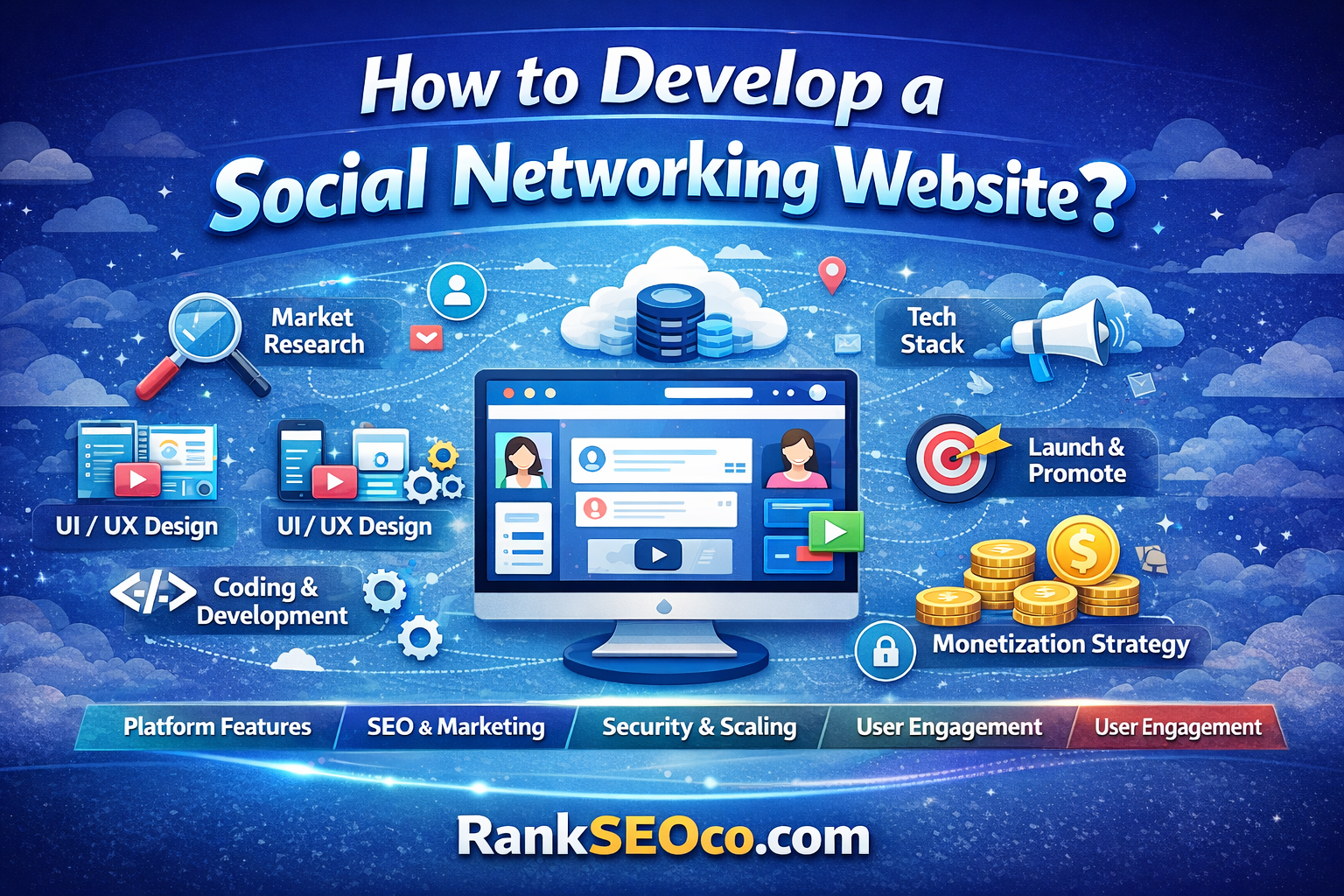


“A successful social networking website starts with a clear niche, strong user experience, and scalable technology. Build real connections first, and growth will follow naturally.”
- Yousaf CEO of RankSEOco
When approaching social network creation, I usually begin by looking at the structure behind a strong social networking website rather than rushing into coding. The goal is to shape a reliable digital platform that supports online communities, encourages social interaction, and scales as global users grow. Strong conceptualization and platform planning guide the early phase of website development, followed by careful website design, structured platform architecture, and focused web development.
A successful social platform works inside a wider digital ecosystem where social media networks like Facebook, Instagram, and LinkedIn already influence user behavior, so the platform must support online networking, strong user connection, and smooth social communication through a well-built networking system and scalable platform infrastructure. The process blends technology planning, software planning, and product development to deliver a stable social web application that serves as both a communication platform and community platform for niche communities and the broader internet community.
Every strong user platform focuses on user experience, clear UX design, and an engaging interactive platform that attracts an active online audience, strengthens social engagement, encourages network building, and drives user base growth.
Behind the scenes, the right technology stack supports platform development, enables efficient platform launch, and prepares a smart scaling strategy so the digital product evolves into a powerful social media platform and vibrant digital community where consistent online interaction happens naturally through thoughtful website strategy and structured website strategy planning.
Why Build a Social Networking Website?
Creating social networking sites is not only about building technology but also about shaping environments where online connections, information sharing, and meaningful digital communication happen daily. From my experience working with digital platforms, a well-positioned network drives strong community engagement, allows identity expression, and supports both personal networking and professional networking.
For business marketing, the advantage lies in target audience reach, stronger brand loyalty, and direct access to a growing digital audience within an active online community. A successful platform taps into a massive global market of online users while connecting niche industries and niche interests through efficient community building and sustained network building.
When done right, it becomes a scalable business model where revenue generation comes from advertising revenue, a structured subscription model, and valuable premium features. Unlike relying on third-party networks, building your own platform strengthens platform ownership, improves digital presence, and encourages deeper audience interaction, user interaction, and long-term online engagement within a thriving online ecosystem driven by continuous content sharing, effective business promotion, and steady social platform growth.
Step 1: Define Your Purpose and Niche
Every successful platform begins with clear purpose definition and focused niche selection. In my projects, defining the target audience early shapes the entire social networking site strategy and ensures the platform maintains a strong platform focus instead of trying to serve everyone. Through careful audience segmentation, the platform can reach the right niche audience while building true market differentiation and strategic platform positioning.
A strong network acts as a problem-solving platform that responds to real audience needs, which also strengthens competitor differentiation in crowded markets. Many founders study examples such as the LinkedIn platform for professional networking and career networking or the Instagram platform, where visual storytelling attracts users driven by specific user interests.
These insights help refine the platform concept, guide audience targeting, and shape a clear social platform idea supported by a sustainable niche community. A thoughtful niche strategy also strengthens platform uniqueness, improves market positioning, and helps define user-focused features that support a strong platform value proposition.
Step 2: Conduct Market Research
Before development begins, detailed market research ensures proper idea validation and prevents costly mistakes. A structured process usually starts with deep competitor analysis and technical platform analysis to understand both competitor strengths and competitor weaknesses.
At the same time, evaluating user needs through user surveys, structured feedback collection, and detailed audience research produces valuable research insights supported by real research data. Studying market trends, evolving social media trends, and rising video content trends also reveals where engagement is moving, while emerging AI recommendations reshape how users discover content across niche communities.
This combination of insights supports stronger concept refinement, a smarter development strategy, and a clearer design strategy that aligns the product with real market demand.
When teams also evaluate social platform analysis alongside detailed user behavior analysis, they gain the clarity needed to move forward with confidence.
Step 3: Plan the Features of Your Social Networking Website
Feature planning defines how people actually experience the platform, so identifying the right social networking features and essential features becomes a strategic task. At the core are strong user profiles with detailed personalized profiles, engaging profile photos, expressive profile bios, and structured personal information that help users build identity within the network.
A dynamic news feed or content feed organizes user updates, social posts, and meaningful user interactions that drive daily activity. Communication remains central, which is why a powerful messaging system, including private messaging and group chats, supported by reliable communication tools, is critical for engagement.
Connection layers like friend connections and a followers system strengthen network building, while powerful content sharing allows photo sharing, video sharing, and link sharing that keep the platform active. Smart discovery tools such as search functionality, including people search, group search, and content exploration through content discovery, help users navigate the network easily. Engagement improves with a strong notifications system that delivers real-time alerts, including like notifications, comment notifications, and message notifications.
Modern platforms also expand through AI recommendations, interactive live streaming, business-driven e-commerce integration, and community-focused event creation, all organized through structured platform features planning, clear audience-focused features, and efficient platform functionality.
Step 4: Choose the Right Technology Stack
Technical architecture determines how reliable and scalable the platform becomes. A strong technology stack ensures high platform performance, strong platform security, and reliable website scalability as the network grows. Most modern platforms start with frontend development using HTML, CSS, and JavaScript, often supported by frameworks like React, Angular, or Vue.js for dynamic interfaces.
On the server side, stable backend development commonly relies on Node.js, Django, Ruby on Rails, or Laravel, each offering flexible options for scalable applications. Reliable database systems such as MySQL, PostgreSQL, and MongoDB manage secure user data storage and support large-scale user activity.
For infrastructure, many teams depend on cloud hosting services like AWS, Google Cloud, and Microsoft Azure, which deliver scalable infrastructure services. Smooth frontend backend communication happens through powerful APIs, including REST API and GraphQL API, while strong SSL certificates, secure OAuth authentication, and reliable data encryption protect sensitive information.
Choosing the right stack also depends on project scale, the team’s technical expertise, and the available development budget.
Step 5: Design the User Experience (UX) and User Interface (UI)
A platform may have powerful features, but adoption depends heavily on thoughtful user experience design and intuitive user interface design. Effective UX design begins with understanding how people interact with the system, while UI design ensures visual clarity and smooth navigation.
A balanced platform design encourages deeper user engagement through strong interface usability, clear simple navigation, and structured clear menus supported by responsive interactive buttons. Modern platforms rely on responsive design to guarantee mobile compatibility and reliable cross-device design, while attractive visual design reinforces a recognizable brand identity.
Inclusive platforms also include strong accessibility features and thoughtful inclusive design that support complete user accessibility. Before development begins, teams typically build wireframes and interactive design prototypes to test layouts through detailed design visualization, refining the interface structure and improving user interaction design.
These early steps allow teams to achieve better usability optimization before the product reaches real users.
Step 6: Develop and Test the Platform
After design validation, structured platform development begins with parallel frontend development and backend development. Developers focus on user interface building while engineers implement core logic through business logic implementation, structured database management, and secure server configuration.
Integration plays a major role, as reliable API integration connects essential third party services that expand platform capabilities. Once the system is operational, multiple layers of testing begin. Teams perform system testing, detailed functional testing, and careful usability testing to evaluate real interactions. At the same time, engineers run performance testing and strict security testing to confirm system safety and stability.
Continuous improvements such as website optimization, consistent bug fixing, and rigorous quality assurance strengthen platform stability and help deliver a fast-loading website that supports a smooth user experience and long-term system reliability.
Step 7: Launch and Promote Your Social Networking Website
Once development stabilizes, the next milestone is the official website launch and strategic platform launch supported by focused digital marketing campaigns. Growth usually begins with precise targeted marketing supported by strong SEO optimization that improves search engine visibility and accelerates online visibility.
Early traction often comes from smart referral programs that attract early users and reward participation with exclusive features. A strong presence through social media marketing expands audience reach, strengthens brand promotion, and reinforces the overall marketing strategy behind the platform. Continuous online promotion supported by structured campaign strategy, professional SEO management, and expert digital marketing support drives consistent traffic growth.
Many startups collaborate with agencies for marketing agency support, especially when working with experienced partners like WEBPEAK, a trusted digital marketing company known for web development services and professional SEO services.
Step 8: Scale and Maintain the Platform
Growth introduces new technical demands, which is why consistent platform scaling and reliable platform maintenance become long-term priorities. Monitoring user feedback helps teams plan continuous feature updates while maintaining strong user retention strategies that keep communities active.
As activity grows, server scalability becomes essential for supporting expanding user base growth without slowing performance. Regular security updates and strong data protection protect the network while ongoing performance monitoring identifies issues early. Continuous bug fixing, proactive platform improvements, and advanced system optimization keep the system stable, while intelligent infrastructure scaling ensures smooth performance.
Reliable website maintenance ultimately supports the long-term success of the platform.
Monetization Strategies for Social Networking Websites
A mature network must eventually implement sustainable monetization strategies supported by strong social networking monetization models.
Many platforms begin with advertising revenue through targeted display ads, engaging sponsored posts, and high performing video ads that integrate naturally within user feeds. Premium growth often comes from premium memberships or flexible paid subscriptions that unlock exclusive features for dedicated users.
Platforms also benefit from built-in e-commerce integration, allowing an internal online marketplace where product selling becomes part of the ecosystem. Another scalable model involves affiliate marketing, where platforms earn affiliate commissions by promoting third party promotions. Combined together, these methods form sustainable revenue generation strategies that support long term growth.
Challenges in Developing a Social Networking Website
Despite the opportunities, teams must navigate serious development challenges during growth. Maintaining strong platform security and reliable user data protection is critical as threats such as data breaches and cyberattacks continue to rise.
As platforms grow rapidly, scalability challenges often appear alongside the need for constant performance optimization to maintain speed and stability. Retaining users is another concern, as user retention becomes harder when facing intense user engagement competition across the industry.
Platforms must also meet strict regulatory standards through proper legal compliance, especially global rules like GDPR compliance and other data privacy regulations. Maintaining reliable platform stability requires strong infrastructure management and updated security protocols across the entire system.
Why Hire Professionals for Web Development?
From my experience working with digital products, successful platforms usually rely on professional web development guided by experienced expert developers who understand large-scale architecture.
Complex networks require deep technical expertise and structured technology management to handle the complex development process behind scalable systems. Professionals design a clear development strategy that ensures strong platform scalability, advanced website security, and reliable user satisfaction across the platform.
With expert teams delivering professional solutions, businesses benefit from greater development efficiency, faster project success, and practical expert guidance. A strong development partnership ultimately reduces risk and ensures the platform evolves in the right direction.
Related Blogs

Why Proxy-Checker Is the Go-To Tool for Proxy Verification